Pilates apparatus
Wunda Chair: Not a New Trend, but a Pilates Classic
iSPilates Studio4 min read
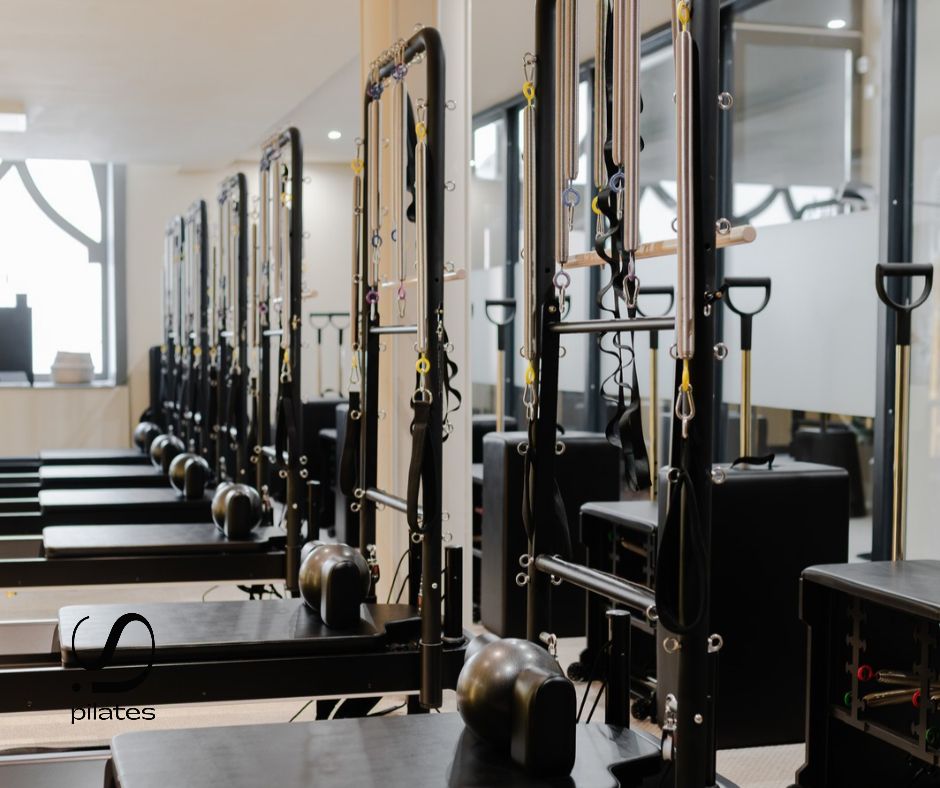
Small. Minimal. And surprisingly serious.
The first time you spot one in a Pilates studio, it's easy to assume the Wunda Chair is some kind of smaller, more modern cousin of the Reformer. In fact, it's the other way round.
The Chair is one of the classic pieces of Joseph Pilates' original apparatus, and its story goes back decades before today's boutique Pilates studios.
It may look modest, but after a few well-chosen exercises, most people stop underestimating it.
The Wunda Chair is small. The work is not.
A Pilates machine designed almost like furniture
One of Joseph Pilates' more unusual ideas was that movement didn't have to belong in a gym.
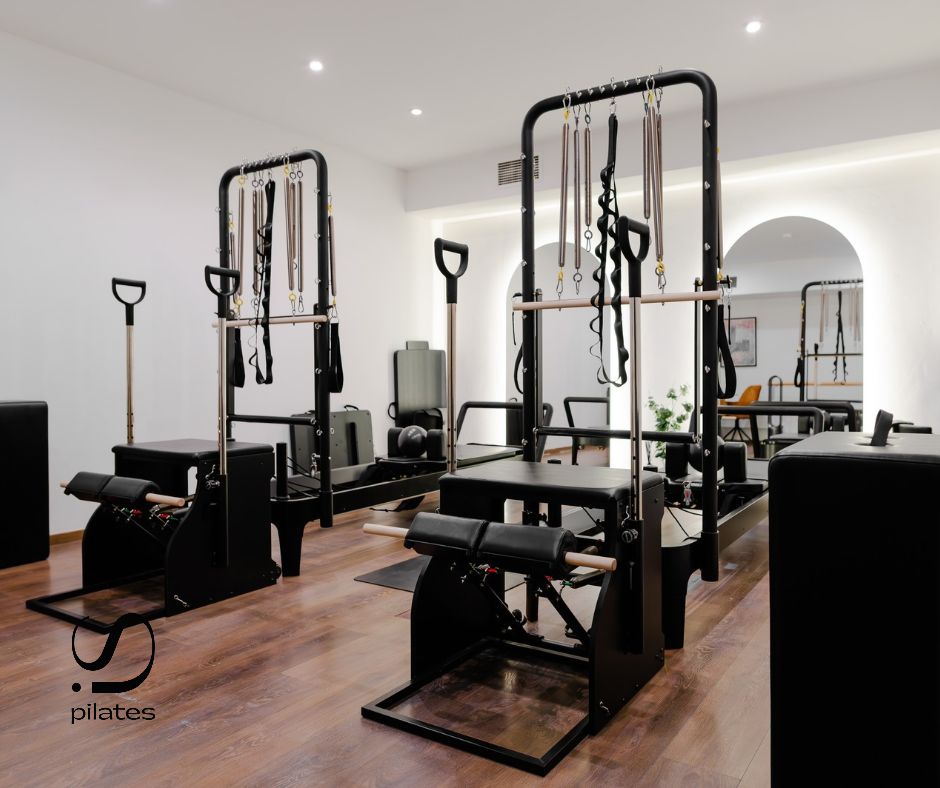
What makes the Wunda Chair so interesting is its compact size: it fits into a small space, yet thanks to spring resistance it allows for an impressive range of exercises.
At first glance, it really does look like a simple seat.
But the heart of the design is the spring-loaded pedal.
And that's where the possibilities open up.
Seated. Standing. Kneeling. Side-lying. Controlling the pedal with your hands or your feet.
Depending on the exercise, the Chair can support you and challenge you at the same time.
Why is it so intense?
On the Reformer, much of your body is supported by a larger surface during many exercises. The Chair has a different character. More compact. More direct. It leaves far less room for the "I'll somehow get through this" kind of movement.
You have to balance. You have to stabilise. You have to control the force of the spring. And remembering to breathe helps, too.
With a smaller base of support, your body has to keep organising itself. The coordinated work of your core, legs, shoulder girdle and stabilising muscles becomes especially important.
That's why even a seemingly simple Chair exercise can demand real concentration.
Strength and control, together
One of the defining features of Pilates is that strength alone isn't enough.
The question isn't just whether you can press the pedal down. It's how you do it.
What's happening with your pelvis? Is your torso staying stable? Where are your shoulders? How controlled is the return? Can you keep the quality of the movement as the load increases?
The Chair shows you very quickly when control slips. And that's exactly what makes it such a great teacher.
Not just for advanced students
Because Chair exercises can look so impressive, it's easy to think it's only for experienced Pilates regulars. Not necessarily.
By choosing the right spring setting and exercise, the Chair can be used at many different levels. Sometimes it offers support while you learn a movement; at other times, the very same piece of equipment becomes a serious test of strength, stability or balance.
That's one of the beauties of Pilates apparatus: it doesn't simply make movement easier or harder. It teaches your body to move in a different way.
Reformer, Mat and Chair – not rivals
We sometimes talk about the different forms of Pilates as if you had to pick one. Reformer or Mat? Chair or Reformer?
Yet in Joseph Pilates' original thinking, they were all parts of one system.
The Reformer can help you understand and refine a movement pattern. The Mat asks you to create more and more of that control with your own body. And the Chair tests the very same principles in a completely different setting.
Stability. Control. Strength. Coordination. Precision.
A different piece of equipment. The same body.
An old piece of equipment that still feels modern
Perhaps this is the most fascinating thing about the Wunda Chair.
We don't use it today because someone invented a new Pilates trend for Instagram. We use it because almost a century ago, a remarkably intelligent concept of movement was born – and its principles still work.
Behind the Chair's simple shape lies a complex challenge. It won't let you just go through the motions. It asks for attention. Precision. Presence.
And when a movement that once felt shaky suddenly becomes stable, controlled and natural, that special Pilates moment arrives: your body is no longer simply following the movement. It understands it.
iSPilates – The Body Awareness Concept. Here every change is yours.
Come and experience Pilates at iSPilates in Budapest – get to know your body, grow with intention and discover what you're truly capable of. Book your class today!
Related class: Classes