Pilates history
Moira Stott and the Evolution of Modern Pilates
iSPilates Studio3 min read
When the classic method met modern body awareness
Pilates was born more than a hundred years ago, yet it still feels remarkably modern. Part of the reason is that while its core principles have stayed the same, the method itself has never stopped evolving.
One of the key figures in that evolution is Moira Merrithew, formerly Moira Stott, who began rethinking her classical Pilates experience through the lens of modern anatomy and biomechanics. That work grew into the approach known around the world today as STOTT PILATES®.
Not replacing it. Building on it.
Joseph Pilates' original method, Contrology, was built on controlled movement, concentration, breathing, precision and the whole body working together.
That core idea still holds true.
But what we know about how the body works has moved on enormously since then. From the 1980s, Moira Stott and her future husband, Lindsay Merrithew, worked with physiotherapists, sports medicine experts and movement specialists to bring Pilates exercises in line with new anatomical and biomechanical knowledge.
The goal was never to create a completely different kind of Pilates.
Quite the opposite: to keep what was brilliant about the original method – and to understand more precisely what is actually happening in the body along the way.
What makes the modern approach different?
One of the biggest shifts was in how we think about the position of the spine and pelvis.
Modern Pilates doesn't try to force every body into the same artificial position. Instead, it places more emphasis on respecting the natural curves of the spine, finding the right pelvic position, stabilising the shoulder blades, letting the ribcage move – and, of course, breathing.
In other words, it's not just about what you do.
It's about how you do it.
Where does the movement start? What's stabilising you? Which muscles are working? Where is the body compensating? And how can the same exercise be done more precisely, more safely and more effectively for this particular person?
It sounds like a small difference. In reality, it's huge.
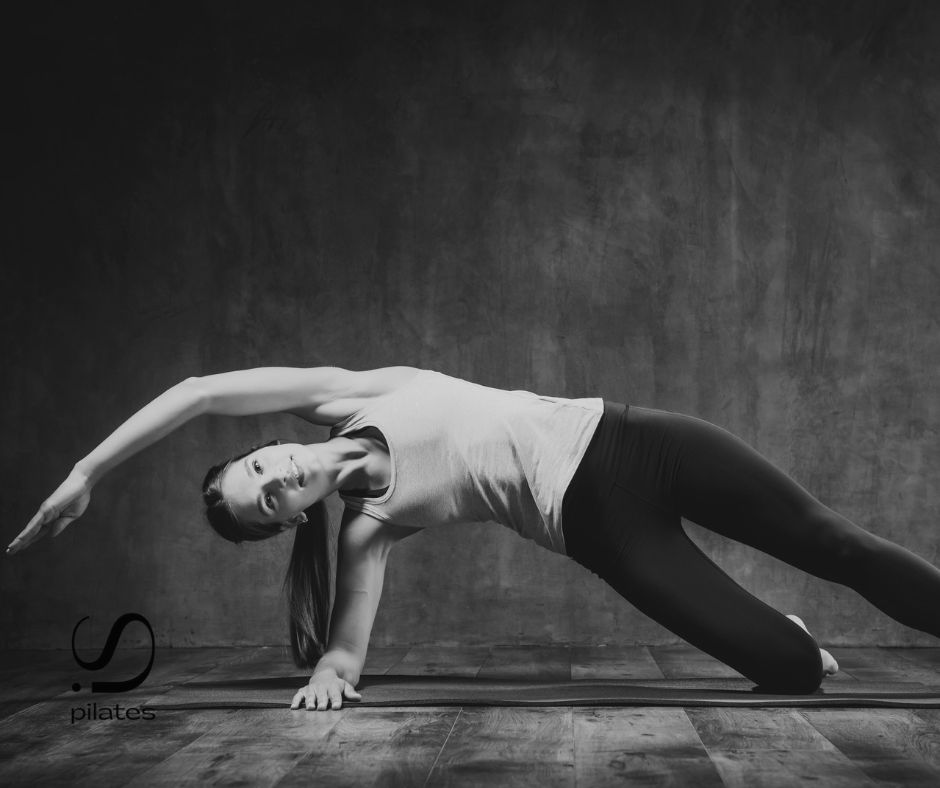
Same exercise. Different body.
This may be one of the most important insights of modern Pilates.
No two bodies are exactly alike.
We all have different proportions, mobility, strength, sporting backgrounds and posture – not to mention the movement habits we bring with us from everyday life.
That's why a good Pilates class is more than a sequence of exercises. Your instructor is constantly watching, correcting and adapting when needed.
An exercise can be made easier or harder. You might get a different spring setting, a different starting position or a different piece of equipment. And sometimes one tiny adjustment completely changes what you feel.
That's exactly what makes Pilates truly personal.
The evolution continues
Joseph Pilates created a system that was far ahead of its time. Modern Pilates doesn't take anything away from that legacy – it carries it forward.
Today's anatomical knowledge, biomechanics, the range of apparatus and exercises that can be tailored to the individual all point in the same direction: getting to know our bodies better, and learning to use them more intelligently.
That's why the STOTT Pilates methodology is such an important part of the iSPilates approach.
Because for us, progress doesn't mean being able to do more and more exercises.
It means understanding more and more about what your body is doing while you move.
Related class: Classes